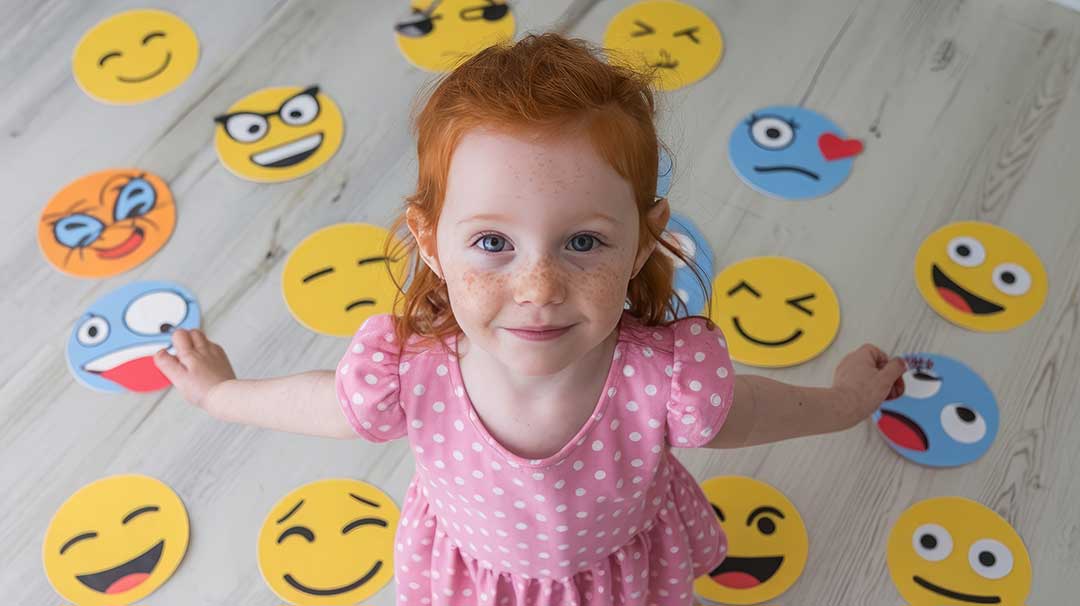
From their very first months, children experience emotions intensely. Joy, frustration, fear, and anger are fully expressed, often without the words to name them. At this age, learning to recognize and welcome these emotions is a key developmental step
In the 18 months–3 years section, support happens daily through relationships, observation, and verbalization. Adults put words to what children are experiencing: “You are angry,” “You are sad,” “You are happy.” This gradually helps toddlers better understand what is happening within them.
A safe and caring environment plays a fundamental role. It allows children to express their emotions with confidence, while gradually learning to regulate them. Everyday moments—playtime, separations, conflicts, meals—become opportunities for learning and support.
At this age, children also discover life in a group. Interactions with others can trigger many emotions: sharing a toy, waiting for their turn, accepting a refusal. These experiences are essential for gradually developing the foundations of social relationships.
Supporting emotions from a very young age means giving children their first reference points to understand themselves, feel secure, and grow calmly. Step by step, they learn that every emotion has its place and can be acknowledged and supported.